






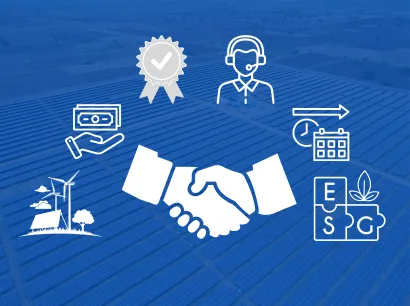
In this blog, you’ll learn:
- Understand the key drivers of corporate Net Zero, including emissions management and renewable energy adoption.
- Discover the essential factors to consider when selecting an energy transition partner for your business.
As businesses embark on their Net Zero journey, understanding Scope 1, Scope 2, and Scope 3 emissions is an important first step. Scope 1 covers direct emissions from company-owned operations, Scope 2 includes indirect emissions from purchased electricity, while Scope 3 accounts for emissions across the entire value chain, from suppliers to product use. Since Scope 3 often represents the largest share of a company’s carbon footprint, addressing all three scopes is essential to building a credible and effective decarbonisation strategy.
As businesses begin their Net Zero journey, understanding Scope 1, Scope 2, and Scope 3 emissions is the first step towards identifying emission hotspots and building an effective decarbonisation strategy. To learn more about emissions, visit our blog on types of emissions.
As the global focus on climate action and decarbonisation intensifies, businesses across sectors are being called upon to lead the way in sustainable transformation. One of the most critical components of this journey is the Net Zero transition.
What is a Net Zero Transition?
A Net Zero transition refers to a company’s strategic move to reduce its greenhouse gas emissions to near zero, primarily by switching to renewable energy sources and offsetting any remaining emissions through verified carbon removal methods such as afforestation, direct air capture.
It involves decarbonising business operations, adopting sustainable technologies, and making climate-conscious decisions across the value chain. For today’s businesses, Net Zero is a necessity.
Why does Net Zero matter for Corporates?
Net Zero is no longer just a sustainability target – it’s a strategic pathway in the long term for businesses. A clearly defined Net Zero roadmap helps companies align with global climate goals, comply with regulatory mandates and build a future-ready brand.
Governments, financial institutions, and customers are demanding greater climate accountability by the corporate companies. Transitioning to clean energy is the fastest and most effective way to future-proof your business.
To put this into perspective: in Q4 of Calendar Year 2024 alone, India’s corporate renewable energy capacity grew by over 2 GW, reaching a total of 43+ GW. This number underscores the accelerating pace and significance of renewable energy adoption among Indian corporates.
In India, the Net Zero transition is being accelerated by both regulatory requirements and voluntary corporate commitments. SEBI’s Business Responsibility and Sustainability Reporting (BRSR) framework requires the top 1,000 listed companies to disclose their ESG performance, while initiatives such as RE100 and the Science Based Targets initiative (SBTi) are encouraging businesses to transition to renewable electricity and adopt science-based emission reduction targets.
This momentum is already reflected in India’s corporate renewable energy landscape, with installed corporate renewable energy capacity reaching 43.8 GW by December 2024, including 2.04 GW added in Q4 2024 alone.
Total Corporate Renewable Capacity (in MW) – December 2024

Image Source: Bridge to India
Things to Look for in an Ideal Energy Transition Partner:
1. End-to-End Solutions
Your energy partner should offer end-to-end expertise – covering everything from energy audits, financing, design and procurement, ESG and safety compliance, regulatory approvals, project execution & commissioning to long-term asset maintenance. Comprehensive energy transition services not only save time and reduce risks but also ensure consistency and quality across every stage.
2. Guaranteed Cost-Savings
If you are choosing renewables, wind or solar power cost must be less than grid tariffs. Whether it’s rooftop or Open Access, your RE partner should guarantee at least 30–50% cost savings over conventional electricity to make the transition truly beneficial.
3. Proven Track Record
Check if the partner has executed large-scale Renewable Energy projects across different sectors and geographies. A strong track record ensures they understand industry-specific needs and can navigate technical or regulatory challenges with ease. The experience they bring to the table will help you get the best and most effective RE solutions.
4. Comprehensive Range of Solutions
Your energy transition partner should offer a diverse and innovative portfolio of clean energy solutions such as Open Access, solar carports, battery storage, I-RECs. The ability to provide tailored solutions ensures flexibility that aligns perfectly with your unique energy goals. Furthermore, A broad basket of renewable energy solutions supports scaling of your projects.
5. Long-Term Consistency and Future-Readiness
Clean energy contracts typically run for 20–25 years, making it vital to choose a partner who can ensure reliable, long-term service. Beyond initial execution, they should offer consistent performance, transparent communication, and responsive support throughout the contract duration.
Equally important is future readiness. Your partner should be able to scale solutions and integrate emerging technologies like battery storage or RTC power as your energy needs evolve. This ensures your transition remains relevant, evolving, and aligned with changing business and regulatory landscapes.
6. Seamless Service
You need a partner who is easy to reach, quick to respond, and keeps you informed at every step, from planning to performance tracking. Your clean energy partner should translate complex energy and performance data into clear insights, helping you to monitor your plant performance without having technical expertise.
7. Strong ESG Practices
Environmental, Social, and Governance (ESG) compliance must be a core commitment of your energy partner – not just a checkbox exercise. It should be a built-in part of their ecosystem.
Ethical land use, local job creation, community development, and biodiversity protection are few essential pillars for anyone thinking about sustainable growth.
Your partner should also help you stay ahead of evolving sustainability frameworks and reporting requirements such as BRSR, while supporting broader corporate Net Zero commitments through robust emissions data, governance practices and transparent reporting.
8. Regulatory Knowledge
Energy laws and incentives change frequently. Choose a partner with deep regulatory expertise to optimize policy benefits, and ensure your project complies with all norms at DISCOM and Central level.
With the rollout of India’s Carbon Credit Trading Scheme (CCTS), businesses will increasingly need partners who can help them navigate emerging carbon market regulations while maximising compliance and commercial opportunities.
How can Fourth Partner Energy support your company’s Net Zero Goals?
With over 3.5 GW of clean energy assets under operation and in portfolio across Southeast Asia, Fourth Partner Energy (FPEL) is corporate India’s leading renewable energy solutions platform.With increasing focus on Scope 1, Scope 2, and Scope 3 emissions, evolving regulations such as BRSR, and growing corporate commitments towards RE100 and Net Zero, businesses need more than just a renewable energy provider—they need a long-term energy transition partner. FPEL works closely with organisations to identify the right mix of clean energy solutions, enabling them to reduce emissions, optimise energy costs, and build a resilient decarbonisation roadmap.
As a trusted energy partner for businesses, FPEL enables:
- End-to-end solutions: from advisory and design to execution and maintenance
- A comprehensive range of offerings: On-Site solar, Open Access, Battery Storage, and I-RECs
- Tailored solutions for each client, ensuring both energy and financial efficiency
We serve over 400 corporate clients across sectors like manufacturing, automobile, IT, pharma, FMCG, Information Technology and more. Our mission is to accelerate the energy transition for Indian and global corporates, empowering them to achieve RE100 targets.
FPEL’s Marquee Corporate Clientele

Accelerate Your Firm’s Energy Transition Goals with FPEL
Beyond deploying renewable energy assets, FPEL partners with businesses throughout their Net Zero journey – from identifying emission hotspots and selecting the right clean energy mix to navigating regulatory requirements and delivering measurable carbon and cost savings. Our integrated approach enables organisations to build practical, future-ready decarbonisation roadmaps.
Choosing the right energy transition partner is not just a strategic decision – it’s a commitment to your business’s sustainable future. The ideal partner brings technical expertise, a wide range of solutions, regulatory knowledge, and most importantly, long-term value in terms of cutting both cost and carbon emissions. As corporates accelerate toward net zero roadmaps, working with a reliable energy partner can make all the difference in achieving climate goals.
At Fourth Partner Energy, we are committed to being that trusted partner – empowering businesses to transition efficiently and responsibly to clean energy.
Frequently Asked Questions (FAQs)
What is a Net Zero transition?
A Net Zero transition is the process of reducing greenhouse gas emissions across business operations by improving energy efficiency, adopting renewable energy, and addressing unavoidable emissions through credible carbon management strategies.
Why is renewable energy important for achieving Net Zero?
Renewable energy is one of the fastest and most cost-effective ways to reduce Scope 2 emissions while lowering long-term electricity costs and improving sustainability performance.
Why should businesses start their Net Zero transition now?
Businesses that begin their Net Zero transition early are better positioned to reduce energy costs, meet evolving sustainability regulations, strengthen ESG performance, and stay competitive in a low-carbon economy.
How can businesses measure progress towards their Net Zero goals?
Businesses can measure progress by tracking greenhouse gas emissions, renewable energy adoption, energy consumption, carbon intensity, and other sustainability metrics through regular monitoring and reporting.
What are the business benefits of partnering with an experienced energy transition company?
An experienced energy transition partner helps businesses identify the right renewable energy solutions, manage project execution, navigate regulatory requirements, optimise long-term energy costs, and support their broader sustainability objectives.
Need a Clean Energy Partner for Your Business?
We provide energy transition services for corporates to deliver cost savings and climate impact.
Reach out to us at marketing@fourthpartner.co