







Artificial Intelligence (AI) is the buzzword everywhere today. From finance and healthcare to manufacturing and logistics, AI is transforming how industries operate and make decisions.
The renewable energy sector is no exception. As solar, wind, and hybrid energy systems continue to expand, managing generation variability, grid integration, and large volumes of operational data has become increasingly complex. AI is helping address these challenges by enabling smarter forecasting, better system monitoring, and more efficient energy management.
Here are some of the key areas where AI is making a meaningful impact in renewable energy.
Artificial Intelligence (AI) in Renewable Energy - Market size (2023 to 2033 in USD Billion)
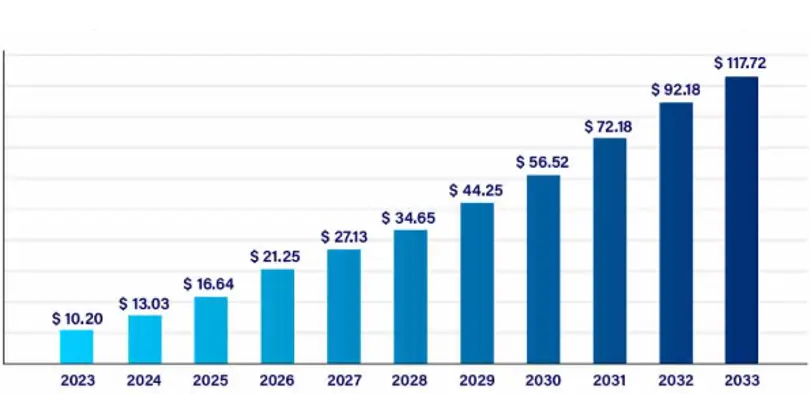
Source: Nova One Advisor
1. Renewable Energy Forecasting
Forecasting is one of the most widely used applications of AI in renewable energy. Solar and wind power depend heavily on weather conditions, which makes predicting generation output challenging.
AI models analyse historical weather data, satellite imagery, and plant performance data to forecast solar irradiance and wind speeds more accurately. These models can process large datasets and identify patterns that traditional statistical methods often miss.
Better forecasting allows grid operators and RE developers to plan energy supply more effectively. It also reduces curtailment risks and supports smoother integration of renewable energy into the grid.
2. Site Selection and Resource Assessment
Selecting the right location is a critical step in developing renewable energy projects. AI tools can analyse large volumes of geographical data, such as solar radiation levels, terrain characteristics, land availability, and proximity to transmission infrastructure.
AI based analysis can also help assess potential environmental and natural resource considerations during site selection. Developers can evaluate nearby ecosystems, water bodies, and other environmental factors while planning RE installations.
3. Predictive Maintenance
Renewable energy plants consist of components such as solar modules, inverters, wind turbines, and monitoring systems that operate continuously in demanding environmental conditions.
Traditionally, repairs were often carried out only after a problem became visible or equipment stopped functioning. This reactive approach could lead to downtime and lost generation.
AI powered predictive maintenance changes this approach. Sensors installed across RE plants generate operational data that AI systems analyse to detect early signs of equipment faults. This allows operators to schedule maintenance proactively and improve the reliability of clean energy assets.
4. Improving Renewable Energy Plant Performance
MW-scale renewable energy plants generate significant volumes of operational data every day. This includes parameters such as inverter performance, panel temperatures, energy output, etc.
AI algorithms analyse these datasets to identify inefficiencies and performance gaps within the system. For example, AI can detect underperforming solar panels, analyse inverter behaviour, or evaluate turbine efficiency under different operating conditions.
5. Grid Integration
As renewable energy capacity grows, electricity grids need to handle power coming from different sources such as solar and wind plants. Since renewable energy generation can vary based on external conditions, managing this supply efficiently becomes important.
AI enabled grid management systems analyse real time electricity demand, energy generation patterns, and grid conditions to optimise power distribution. These systems can also help predict demand fluctuations and support demand response strategies.
This intelligent grid management helps maintain grid stability while enabling higher efficiency.
6. Hybrid Systems and Energy Storage Management
Many renewable energy projects combine technologies such as solar, wind, and energy storage. Managing these hybrid systems requires coordination between multiple energy sources.
AI models analyse generation patterns, demand profiles, and system conditions to optimise energy flows across the system and help determine when energy should be stored or released based on expected demand and generation levels.
AI Tools Powering Renewable Energy
Several artificial intelligence technologies support renewable energy forecasting and optimisation. Machine learning frameworks such as TensorFlow, PyTorch, and Azure Machine Learning are widely used to develop models that analyse renewable energy datasets.
Tools such as pvlib, a Python-based library for solar modelling, help simulate solar PV system performance and convert weather data into solar forecasts. Energy analytics platforms such as AutoGrid and Enlitia are also used for forecasting and grid optimisation by analysing large volumes of operational data.
These technologies help renewable energy companies convert plant data into actionable insights.
Some Applications of Artificial Intelligence in Energy Sector
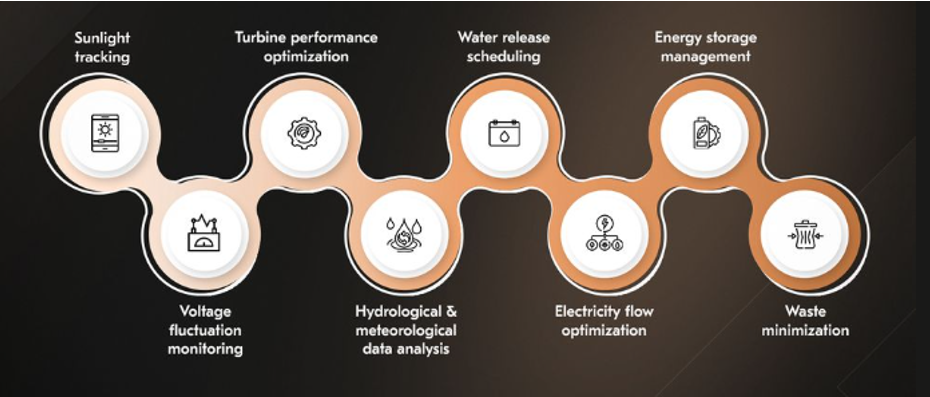
Source: Acropolium
The Road Ahead
Artificial Intelligence is expected to play an even greater role as renewable energy systems continue to expand.
Future energy systems will require more intelligent coordination between generation, storage, and grid infrastructure. AI will support this transition by enabling faster data analysis, smarter forecasting models, and more efficient energy management systems.
Fourth Partner Energy’s Approach to AI
Fourth Partner Energy has consistently focused on adopting new technologies to enhance operational efficiency and deliver better outcomes for its customers. AI is increasingly becoming an integral part of our operations, enabling improved decision-making and more streamlined processes. We have already integrated AI across areas such as ERP systems, process workflows, and reporting. We are also advancing our use of AI in predictive maintenance to further strengthen plant performance and asset reliability. As we continue to grow, we aim to deepen our use of AI to drive efficiency, reliability, and smarter renewable energy solutions.
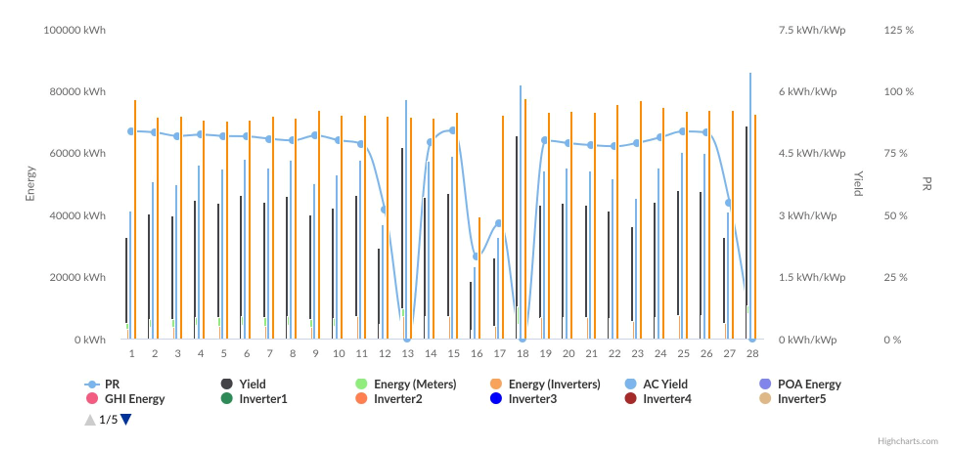
Monthly Energy Generation Data of One of Our Rooftop Solar Clients
Conclusion
AI is steadily becoming an important part of how renewable energy systems are planned and operated. From improving forecasting to enabling better day-to-day decision-making, it is helping make these systems more efficient and reliable.
As renewable energy continues to scale, managing this complexity will become even more critical. AI will play a key role in ensuring that renewable energy is not just clean, but also consistent and dependable.
Frequently Asked Questions
How is AI used in renewable energy?
AI is used for renewable energy forecasting, predictive maintenance, plant optimisation, grid management, and hybrid energy system coordination.
Why is AI important for solar and wind energy?
Solar and wind generation depend on weather conditions. AI improves forecasting accuracy and helps integrate renewable energy more efficiently into electricity grids.
Can AI improve renewable energy efficiency?
Yes. AI helps detect equipment faults early, optimise plant performance, and improve generation forecasting, all of which contribute to improving overall efficiency.
What types of AI models are used in renewable energy?
Common models include Artificial Neural Networks, Support Vector Machines, Random Forest models, and deep learning models such as CNN and LSTM.
Are AI technologies already used in renewable energy projects?
Yes. Many renewable energy developers and utilities already use AI tools in various operations.
Looking to adopt smarter and more reliable renewable energy solutions for your business?
Reach out to us at marketing@fourthpartner.co