





Executive Summary
As businesses look for ways to reduce electricity costs and accelerate their sustainability goals, Open Access power has emerged as an effective renewable energy procurement model, enabling corporates to source clean energy directly from large-scale solar, wind, and hybrid projects.
This guide breaks down the Open Access journey into five simple steps, helping businesses understand energy requirements, evaluate feasibility, assess long-term benefits, and choose the right renewable energy partner for a smooth transition.
India’s Corporates & their Decarbonization Goals
Businesses across India are increasingly looking beyond conventional power procurement to reduce electricity costs, improve energy security, and meet their sustainability commitments. One of the most effective ways to achieve these objectives is through Open Access power.
Open Access enables corporate consumers to procure renewable energy directly from large-scale solar, wind, or hybrid power plants instead of relying entirely on conventional grid power.
With supportive policies, improving renewable energy economics, and growing corporate ESG commitments, Open Access has emerged as a strategic energy procurement model for businesses. Read more about it here.
Is adopting Solar or Wind energy via Open Access complicated?
For organizations exploring Open Access for the first time, the process can seem slightly technical. Questions around eligibility, procurement models, cost savings, and regulatory approvals often create uncertainty.
The good news is that getting started is simpler than it appears. By following a structured approach, businesses can make informed decisions and ensure a smooth transition to renewable energy.
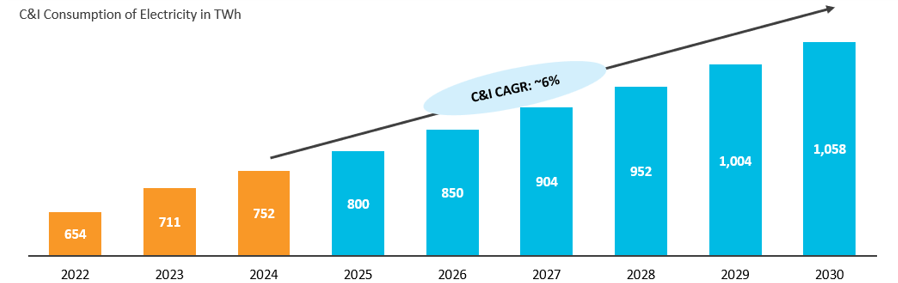
Here are five simple steps to help you get started.
1. Assess Your Energy Consumption
The first step is to understand your organization’s electricity consumption patterns. This provides the foundation for evaluating whether Open Access is the right solution.
Review your monthly electricity bills, contracted demand, peak load, and annual energy consumption across your plant or facilities. Businesses with high and consistent electricity demand often derive the greatest value from Open Access.
A clear understanding of your energy profile enables better decision-making throughout the Open Access journey. For example, variations in energy consumption patterns across different time periods can influence the choice of renewable energy solutions.
2. Define Your Energy and Sustainability Goals
Every business adopts renewable energy for different reasons. While reducing electricity costs is often the primary objective, many organizations are also working towards broader sustainability commitments. This transition is also driven by a growing responsibility towards building a sustainable future, evolving regulatory requirements, and increasing expectations from customers, investors, and other stakeholders.
Clearly defining your goals helps determine the most suitable Open Access solution. These goals may include:
- Reducing long-term electricity expenditure
- Lowering carbon emissions
- Achieving Net Zero commitments
- Supporting ESG reporting and sustainability disclosures
- Increasing the share of renewable energy in operations
- Improving long-term energy security
Establishing clear objectives early helps align business, finance, procurement, and sustainability teams throughout the decision-making process.
3. Assess Open Access Models and Feasibility
Once your objectives are defined, the next step is to evaluate whether Open Access is feasible for your operations which Open Access model is best suited for your business requirements.
This involves understanding available renewable energy options, your state’s Open Access regulations, eligibility criteria, applicable charges.
Businesses can choose from different procurement models, including Third-Party Open Access, Captive, and Group Captive models, depending on their operational requirements and investment preferences. It is equally important to evaluate the most suitable renewable energy source. Depending on your location and energy profile, solar, wind, or hybrid projects may offer different advantages in terms of generation patterns and cost optimization.
A detailed feasibility assessment helps organizations identify the solution that delivers the best balance between cost, operational reliability, and sustainability outcomes.
4. Evaluate the Cost and Sustainability Impact
Before moving ahead, businesses should evaluate both the financial and environmental benefits of adopting Open Access.
Beyond immediate electricity cost savings, Open Access offers long-term price visibility by reducing dependence on fluctuating grid tariffs. Over the lifecycle of a renewable energy project, these savings can contribute significantly to operational efficiency and business competitiveness.
At the same time, renewable energy procurement supports in reducing greenhouse gas emissions and increasing the share of clean energy in business operations.
Many organizations also leverage renewable energy to strengthen their ESG performance, meet customer sustainability expectations, and demonstrate measurable progress towards their decarbonization goals. Companies can also quantify the impact created through renewable energy adoption by measuring avoided carbon emissions and other environmental metrics such as water conserved as a result of the project.
Evaluating both financial and sustainability outcomes ensures that the investment creates long-term value across the business.
5. Choose the Right Open Access Partner
The success of an Open Access project depends not only on selecting the right procurement model but also heavily on choosing the right implementation partner.
An experienced renewable energy partner brings together expertise in project development, regulatory approvals, engineering, construction, commissioning, operations, and long-term asset management.
Businesses should evaluate factors such as the partner’s project portfolio, operational experience, financial stability, technology capabilities, and ability to provide end-to-end support across geographies and renewable energy models, including solar, wind, and hybrid solutions.
A reliable partner helps simplify the transition by managing technical complexities while ensuring consistent plant performance throughout the project lifecycle.
How FPEL Helps Businesses Make the Switch to Open Access
At Fourth Partner Energy (FPEL), we help businesses simplify their transition to renewable energy through customised and integrated Open Access solutions.
With over 15 years of experience in the renewable energy sector with a strong portfolio of solar, wind, and hybrid renewable energy assets across multiple states, FPEL supports customers throughout every stage of their Open Access journey, from initial feasibility assessments and project planning to regulatory approvals, project execution, commissioning, and long-term Asset Management.
Our integrated approach enables businesses to reduce electricity costs, improve energy reliability, and accelerate their sustainability goals through renewable energy solutions designed around their operational requirements.
FPEL has over 1.7 GW of operational Open Access projects across the country, spanning solar, wind, hybrid solutions, and emerging technologies such as Hybrid + BESS.
FPEL caters to customers across multiple energy-intensive sectors, including manufacturing, Data Centres, pharmaceuticals, and other industries.
With large-scale open access parks of over 100 MW capacity, FPEL enables businesses to significantly reduce their dependence on conventional energy sources.
As organizations continue to pursue cost optimization and decarbonization, FPEL remains committed to delivering reliable, scalable, and future-ready clean energy solutions.
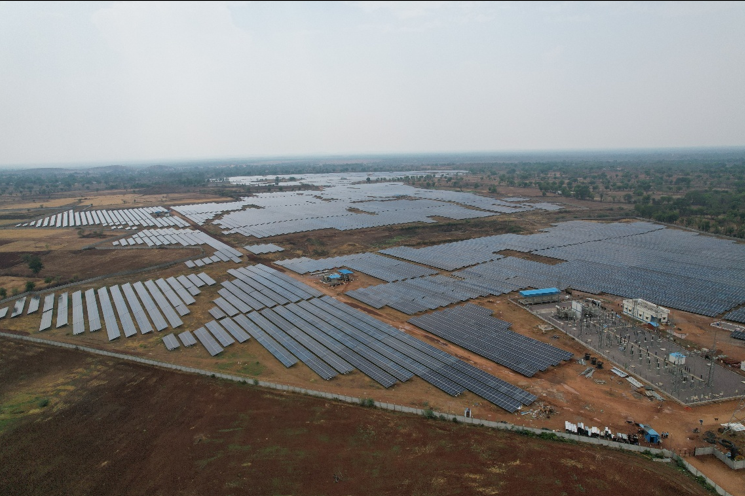
FPEL’s 105 MWp Solar Open Access park at Babina, Uttar Pradesh supplies clean power Varun Beverages, Shriram Pistons, JK Cement, ISGEC
Conclusion
Open Access is no longer just an alternative way of procuring electricity, it has become a strategic business decision for organizations seeking greater cost efficiency, energy resilience, and sustainability.
By understanding your energy requirements, defining clear objectives, evaluating suitable Open Access models, assessing the financial and environmental impact, and partnering with an experienced renewable energy provider, businesses can confidently begin their renewable energy transition.
With the right planning and expertise, Open Access can unlock long-term value while supporting both business growth and sustainability ambitions.
Frequently Asked Questions
1. What is Open Access power?
Open Access enables eligible businesses to procure electricity from off-site renewable energy projects through the existing transmission and distribution network.
2. Which industries benefit the most from Open Access power?
Energy-intensive sectors such as manufacturing, automobiles, pharmaceuticals, data centres, textiles, chemicals, and cement are among the major adopters of Open Access power.
3. What are the different Open Access models?
The most common models include Third-Party Open Access, Captive Open Access, and Group Captive Open Access. The right model depends on a company’s investment preferences, energy consumption patterns, and business objectives. Group Captive is one of the widely adopted Open Access models among businesses due to its financial and operational advantages.
4. What are the benefits of Open Access?
Open Access helps businesses reduce electricity costs, improve long-term price certainty, increase renewable energy adoption, strengthen ESG performance, and support Net Zero goals.
5. How long does it take to implement an Open Access project?
Project timelines vary depending on the state, regulatory approvals, project capacity, and overall scope. Working with an experienced renewable energy partner can help streamline the process and enable faster project execution, with some projects being completed within just 100 days.
6. Why should businesses work with an experienced Open Access partner such as Fourth Partner Energy?
An experienced partner manages feasible solutions, regulatory approvals, engineering, project execution, and long-term operations, ensuring a smoother transition and reliable project performance.
Looking to explore Open Access solutions for your business?
Get in touch with Fourth Partner Energy at marketing@fourthpartner.co to learn how we can help you transition to reliable, cost-effective, and sustainable renewable energy.