



Blog Summary
- Understand why wind-solar hybrid energy is becoming the preferred renewable solution for businesses seeking reliable, round-the-clock clean power.
- Compare wind-solar hybrid plants with standalone solar and wind to see how hybrid systems improve energy reliability and long-term cost savings.
- Learn the five key questions to ask before selecting a hybrid energy developer, from project expertise to Open Access capabilities.
- Discover what differentiates a strong long-term renewable energy partner, including end-to-end execution, O&M excellence, and regulatory expertise.
- See how the right hybrid developer can help future-proof your business by reducing energy costs, improving sustainability, and supporting long-term growth.
What Is a Wind-Solar Hybrid Energy Plant?
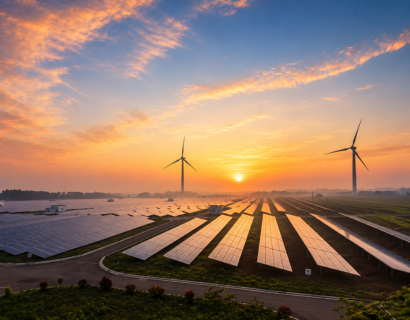
A wind-solar hybrid plant can have solar photo Voltaic modules and wind turbines at the same site, or connects them through shared transmission and scheduling infrastructure, so both sources feed into a common system. The two power generation profiles are complementary rather than overlapping: solar output is strongest from morning to late afternoon, while wind resources in most Indian corridors pick up in the evening and continue through the night. Layered together and often paired with battery storage. The combined output smooths out the peaks and troughs either technology would produce on its own, delivering a more consistent, near round-the-clock renewable power supply across the day and across seasons.
Why Are Businesses Switching to Wind-Solar Hybrid Energy?
India’s Commercial & Industrial (C&I) energy consumers are growing beyond stand-alone renewable energy. The sole use of solar will only produce power in about six to eight hours during the bright day time, while the sole use of wind energy can have huge fluctuations with changing seasons and times of day. However, for a factory or a data centre operating round-the-clock, the sole use of any one of these options will require backing from the grid again.
Wind-solar hybrid systems (WSHs) bridge the gap. Since the sun shines through the day and wind speeds usually pick up during the evenings and nights, using both technologies at the same location results in a smoother generation curve over an extended part of the day. This provides three major benefits to organizations: reduced reliance on expensive grid electricity; optimal energy costs over time; and a greater commitment toward ESG/net-zero goals, because renewables generate a higher proportion of actual consumption than stored/generated electricity.
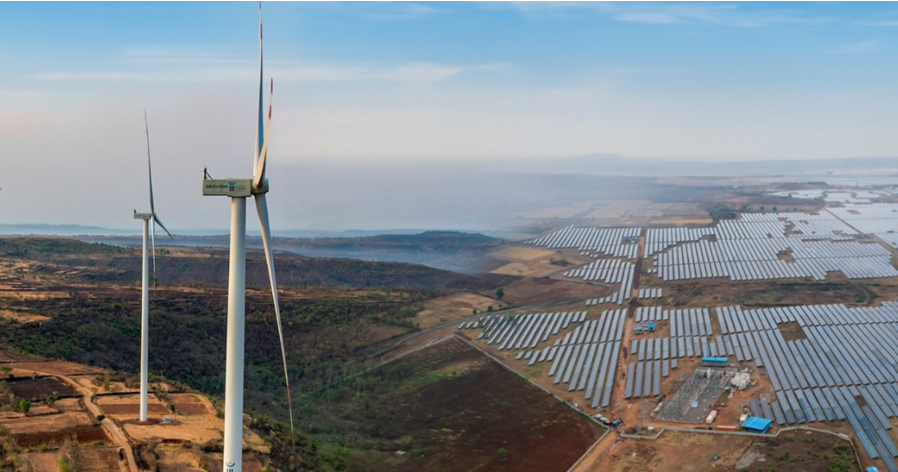
FPEL’s Wind-Solar Hybrid Plant
How Does a Wind-Solar Hybrid Plant Compare to Standalone Solar or Wind?
| Feature | Standalone Solar/Wind | Wind-Solar Hybrid |
|---|---|---|
| Energy Source | Single renewable source | Combination of solar and wind |
| Power Availability | Variable | More consistent |
| Plant Utilization Factor | Moderate | Higher |
| Grid Dependency | Higher | Lower |
| Transmission Infrastructure | Separate utilization | Shared and optimized |
| Seasonal Performance | Weather dependent | Better seasonal balance |
| Energy Cost Optimization | Good | Better long-term savings |
| Reliability | Moderate | Higher |
| ESG Contribution | High | Higher renewable energy utilization |
| Future Integration | Limited | Ideal for Battery Energy Storage Systems (BESS) |
5 Questions to Ask Before Choosing a Wind-Solar Hybrid Developer
Not all renewable energy developers have expertise in developing and operating a hybrid plant efficiently. Thus, developer selection is equally important as the bottom line for the project cost. A developer who excels at designing solar PV systems on its own does not necessarily excel in wind micro siting, managing the wind turbines’ supply chain, or handling the operational schedule of a hybrid plant. The business should look at developer selection as a partnership decision rather than procurement, as most contracts have a span of 20-25 years. Below are few important aspects that a business should consider before choosing a developer for hybrid energy supply.
Q1. Does the Developer Have Proven Experience in Hybrid Projects?
Hybrid projects demand specialized expertise that standalone solar or wind projects don’t require to the same degree: dual-resource assessment to correctly size the solar-to-wind ratio for a site, engineering that accounts for two very different types of generating equipment, transmission planning that optimizes a shared evacuation line, and day-ahead scheduling and forecasting that blends two variable inputs into one dispatch plan. The experience a developer brings in terms of their success in bringing into operation other hybrid plants (not just solar or wind), rather than pure solar or wind plants, is one of the best indications of their capability to develop the current project.
Q2. Can the Developer Deliver End-to-End Renewable Energy Solutions?
The strongest hybrid developers manage the full project lifecycle in-house, rather than outsourcing critical pieces to third parties. That typically spans:
- Project development and site identification
- Engineering and design
- Financing options, including OPEX/PPA models
- EPC execution
- Operations & Maintenance (O&M)
- Performance monitoring and analytics
- Regulatory approvals
- Open Access expertise
A developer that owns each of these stages tends to move faster through approvals, catches design issues before they become costly, and gives the buyer a single point of accountability instead of a patchwork of subcontractors.
Q3. How Important Is Operations & Maintenance for Long-Term Performance?
The economic value of the hybrid power plant is accrued over 20-25 years, not the day that it is built, thus the quality of operations and maintenance service matters even more. Proactive monitoring ensures early detection of the poor performance of turbines and panels, thus preventing any impact on the overall energy production; predictive maintenance means carrying out the repairs according to the real pattern of the wear, thus minimizing downtime; and performance optimization consists of recalculating forecasts, rescheduling, and fine-tuning of inverter and turbine settings to achieve the maximum energy production according to the plant design.
Q4. Why Should Open Access Expertise Matter?
Open Access is the regulatory framework which allows large consumers to purchase electricity directly from the generator rather than having to purchase only from their respective discom, differs significantly from state to state, including all kinds of regulations regarding the process, banking laws, cross subsidy charges, and scheduling issues. Open Access knowledge on the part of a developer who is deeply versed in it will go a long way in helping the consumer in this respect: securing all the regulatory permissions, dealing with forecasts and scheduling issues, energy banking, and so forth.
Q5. How Can the Right Wind-Solar Hybrid Developer Help Future-Proof Your Business?
The selection of a wind-solar hybrid developer is much more than just putting up infrastructure for renewable energy; it is all about finding a reliable partner that will assist your company in cutting down on electricity expenses, improving the reliability of power sources and achieving the goal of sustainability in ever-changing energy environment. A good developer has experience in implementing hybrid projects, full delivery capabilities, well-managed O&M processes and Open Access knowledge.
Fourth Partner Energy – India’s market-leader in Wind-Solar Hybrid Solutions
Fourth Partner Energy (FPEL) develops integrated wind-solar hybrid solutions tailored to the energy needs of Commercial & Industrial customers. FPEL currently has more than 800 MW of wind-solar hybrid capacity under development, alongside over 50 MWh of battery energy storage. The hybrid parks including the Kudligi ISTS Park in Karnataka and Hybrid Park in Gondal, Gujarat supplies to clients such as Filatex, Deccan Fine Chemicals, SKF Engineering.
From project development and engineering to financing, construction, operations, and maintenance, FPEL provides end-to-end support throughout the project lifecycle. Its customer-centric approach, strong execution capabilities, and focus on long-term performance enable businesses to build resilient, future-ready renewable energy portfolios backed by a broader renewable portfolio of 3.5 GW across five countries, with a target of 9 GW of installed capacity by 2031.
Businesses evaluating a wind-solar hybrid partner can reach out to Fourth Partner Energy’s team to discuss what a tailored hybrid solution could look like for their operations.