



Executive Summary
Energy banking is becoming an important factor in India’s Green Energy Open Access landscape, influencing how businesses procure, manage and utilise renewable electricity. This blog explores the evolving energy banking framework in 2026, highlighting key regulatory developments across Indian states and their implications for renewable energy developers and C&I consumers. It also examines how Solar, Wind, Hybrid Renewable Energy and Battery Energy Storage Systems (BESS) can help businesses navigate changing banking regulations, optimise energy utilisation and build more flexible renewable energy procurement strategies.
Beyond Generating Renewable Energy
India’s renewable energy transition is entering a new phase where generating clean electricity is only part of the equation. For businesses, the bigger challenge is ensuring that renewable power is available when it is actually needed.
Commercial and industrial (C&I) consumers are increasingly exploring Green Energy Open Access (GEOA) to procure renewable electricity directly from solar, wind and hybrid power projects. However, renewable energy generation and electricity consumption do not always happen simultaneously. Solar power, for instance, is generated primarily during daylight hours, while many industrial facilities operate throughout the day and night.
This is where energy banking becomes important. It allows consumers to bank surplus renewable electricity injected into the grid and adjust eligible credits against their consumption at a later time, subject to applicable regulations and charges.
However, banking provisions are not uniform across India. State Electricity Regulatory Commissions (SERCs) prescribe different mechanisms for banking charges, settlement periods and withdrawal restrictions.
As India moves through 2026, these regulatory developments are influencing how renewable energy projects are designed, priced and procured. Understanding these changes is essential for developers and businesses looking to optimise their renewable energy procurement strategies.
Understanding Energy Banking Under Green Open Access
Energy banking is an arrangement through which surplus renewable electricity generated by an open access project is credited to a consumer’s account and adjusted against eligible consumption at a later time.
For example, a manufacturing facility may consume 700 units of electricity during the afternoon when its contracted solar project generates 1,000 units. The surplus 300 units can be banked, subject to applicable regulations, and utilised during eligible subsequent hours.
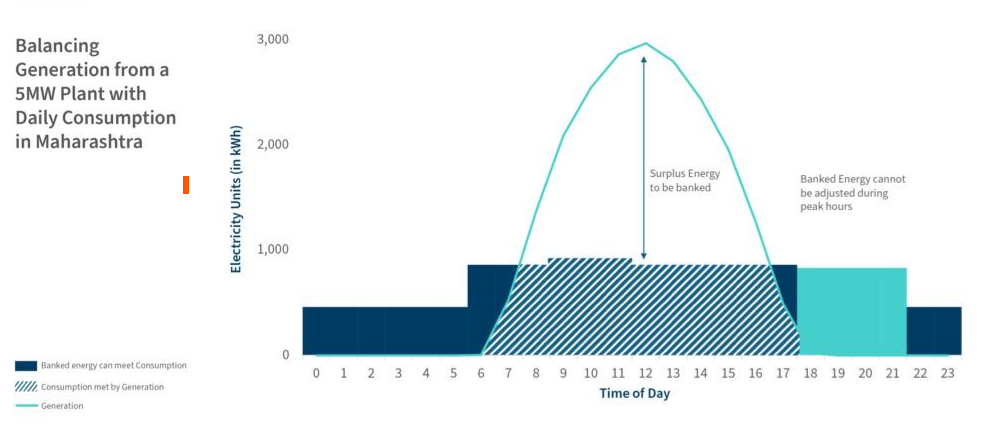
Unlike a Battery Energy Storage System (BESS), energy banking does not physically store electricity. It is an accounting and settlement mechanism facilitated through the electricity grid.
The national framework is governed by the Electricity (Promoting Renewable Energy through Green Energy Open Access) Rules, 2022, notified by the Ministry of Power.
Some key provisions include:
- Green Energy Open Access eligibility for consumers with a sanctioned load or contracted demand of 100 kW or more, subject to prescribed conditions. Captive consumers are exempt from this minimum threshold.
- Processing of complete applications within 15 days, subject to applicable technical requirements.
- Monthly energy banking, subject to applicable banking charges.
- A minimum permitted banking quantum of 30% of the consumer’s total monthly electricity consumption from the distribution licensee.
- Adjustment of banked energy within the same month, without carry-forward to subsequent months.
While the central rules establish the broader framework, state regulators determine several operational aspects and applicable banking charges.
State-wise Energy Banking Developments in 2026
The regulatory landscape across Indian states highlights a shift towards more structured energy banking mechanisms, with greater emphasis on grid requirements, consumption patterns and financial viability.
Maharashtra: Time-of-Day-Based Banking
Maharashtra has witnessed significant developments in energy banking through MERC’s regulatory proceedings, including its March 2026 order in Case No. 75 of 2025.
The framework distinguishes between normal hours (12 AM–9 AM), solar hours (9 AM–5 PM) and peak hours (5 PM–12 AM), with different conditions governing the adjustment of banked energy across these periods.
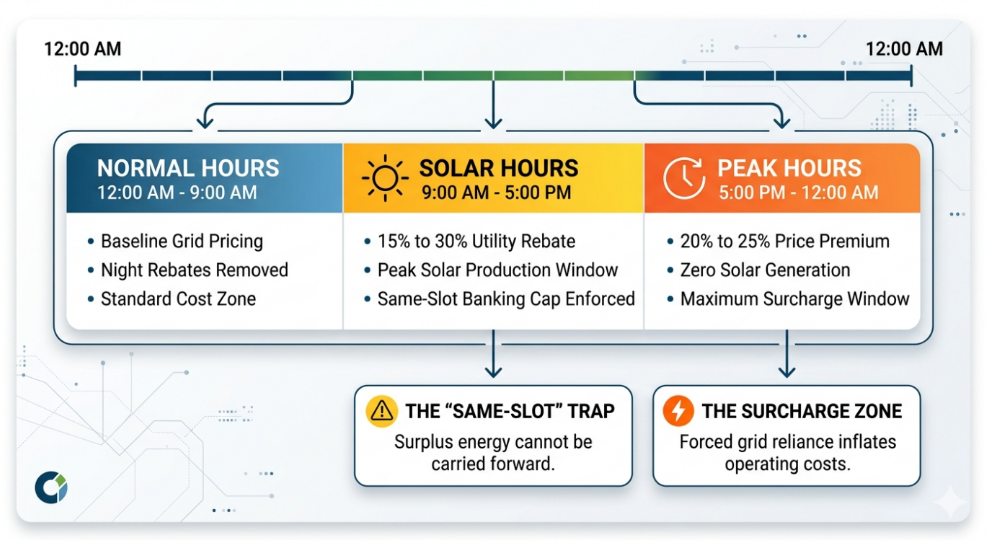
For developers and buyers, this makes consumption patterns increasingly important. Combining solar and wind generation through hybrid renewable energy solutions can help create a more balanced generation profile, while BESS can provide additional flexibility during eligible periods.
Gujarat: Revised Banking Charges
The Gujarat Electricity Regulatory Commission’s Sixth Amendment to the Green Energy Open Access Regulations, 2024, notified in August 2026, introduced a banking charge of ₹1 per unit from 1 September 2026 to 31 March 2027.
From April 2027 onwards, banking charges will be determined through the prescribed regulatory methodology.
This introduces a direct cost consideration for renewable energy procurement. Consumers and developers must account for banking charges while evaluating the overall cost of open access electricity.
Karnataka: Monthly Banking and Time-of-Day Settlement
Karnataka’s Electricity Regulatory Commission introduced its Open Access Regulations, 2025, establishing a revised framework for open access transactions.
The framework provides for monthly banking, an 8% banking charge in kind and Time-of-Day-based adjustment provisions. Unused banked energy cannot be carried forward to the subsequent month.
These provisions make accurate generation forecasting and consumption analysis important for renewable energy project planning.
Andhra Pradesh: Banking Limits and Consumption-Based Settlement
Andhra Pradesh introduced its Green Energy Open Access Regulations in 2024, followed by the First Amendment in 2025.
The framework provides for an 8% banking charge in kind and a 30% banking limit linked to the consumer’s monthly electricity consumption from the distribution licensee.
The amendment also clarifies the treatment of unused banked energy and reinforces the importance of aligning renewable energy generation with actual consumption.
What Do These Changes Mean for Developers and C&I Buyers?
Changing energy banking regulations have implications beyond regulatory compliance. They directly influence the commercial viability of renewable energy projects.
For developers, project sizing must increasingly reflect the consumer’s actual electricity demand rather than simply maximising renewable energy generation. Banking charges, withdrawal restrictions and settlement provisions must also be considered while structuring Power Purchase Agreements (PPAs).
For C&I consumers, evaluating the headline renewable energy tariff is no longer sufficient. Businesses must understand the overall cost of open access electricity, including banking charges, transmission and wheeling charges, applicable surcharges and losses.
Four renewable energy solutions are particularly relevant in this evolving landscape:
- Solar Energy: Project capacity should be aligned with daytime electricity consumption and applicable banking limits to minimise surplus generation.
- Wind Energy: Wind power can complement solar generation through a different generation profile, helping diversify renewable energy procurement.
- Hybrid Renewable Energy: Combining solar and wind can create a more balanced generation profile and potentially reduce dependence on energy banking.
- Battery Energy Storage Systems (BESS): BESS enables physical storage of surplus renewable electricity for subsequent use, helping manage peak demand and improve energy utilisation.
The Road Ahead: Towards More Flexible Renewable Energy Procurement
India’s evolving energy banking framework highlights an important shift in renewable energy procurement. The focus is gradually moving beyond renewable energy generation towards how efficiently electricity can be managed and utilised.
For C&I consumers, this creates an opportunity to rethink conventional renewable energy procurement strategies. Solar and wind power, when combined through hybrid solutions and supported by Battery Energy Storage Systems, can offer greater flexibility in managing electricity demand and improving renewable energy utilisation.
As an integrated renewable energy solutions provider, Fourth Partner Energy (FPEL) offers Solar, Wind, Hybrid Renewable Energy and Battery Energy Storage solutions to help commercial and industrial businesses navigate their evolving energy requirements.
Ultimately, the future of Green Energy Open Access will depend not just on how much renewable electricity is generated, but also on how effectively it can be delivered and utilised when businesses need it.
Frequently Asked Questions
1. What is energy banking in Green Energy Open Access?
Energy banking allows consumers to credit surplus renewable electricity injected into the grid and adjust it against eligible electricity consumption at a later time, subject to applicable regulations.
2. What is the minimum banking entitlement under the Green Energy Open Access Rules?
The central rules provide for a minimum permitted banking quantum of 30% of the consumer’s total monthly electricity consumption from the distribution licensee.
3. Can banked energy be carried forward to the next month?
The central framework provides for monthly adjustment without carry-forward to subsequent months.
4. How do energy banking rules affect C&I consumers?
They influence renewable energy utilisation, overall electricity costs and the financial savings achievable through open access procurement.
5. Can BESS reduce dependence on energy banking?
Yes. Battery storage allows surplus renewable electricity to be stored physically and utilised during periods of higher demand, providing an alternative to relying entirely on grid-based energy banking.