






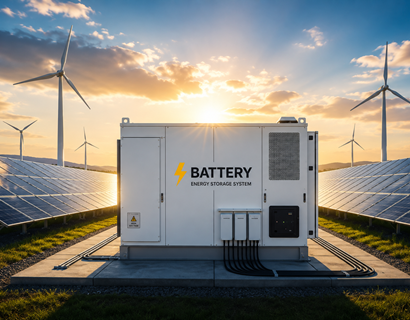
As companies in India seek to become more energy efficient, control peak demands, utilize more renewable energy and make power supply more reliable, the importance of battery storage in energy planning continues to grow.
Battery storage systems can do much more for C&I customers than simply acting as a backup source of power. Battery storage enables demand management, electricity consumption shifting and optimization of renewable energy usage.
India’s energy storage market is also entering a period of rapid growth. It is estimated that India will install around 5 GWh of stationary energy storage capacity by 2026, nine times more than what it installed before. Meanwhile, according to India’s National Electricity Plan, India may need up to 47.24 GW / 236.22 GWh of BESS by 2031–32.
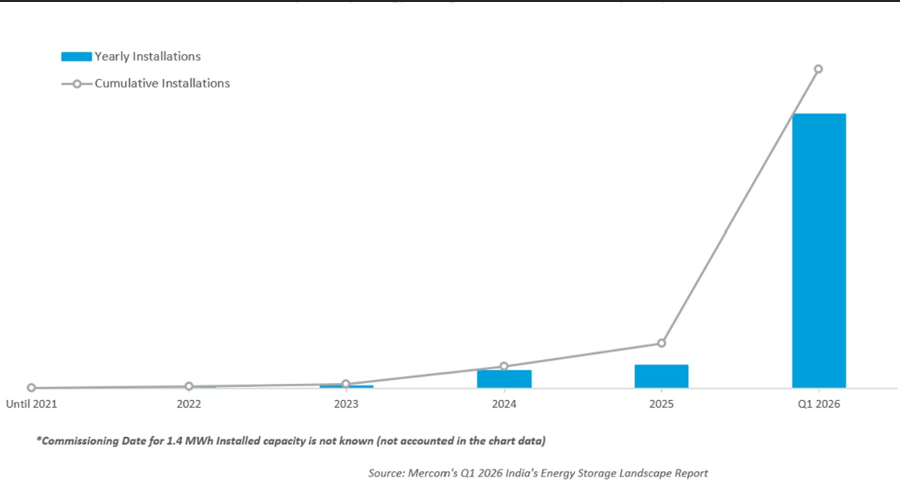
This rapid growth is part of a larger trend that has been happening in the business and power generation sectors, changing the perception about energy storage from just a backup source to something that can be very useful in controlling the use of electricity.
Here, commercial and industrial BESS comes into action. With the help of BESS, businesses can store and then utilize energy whenever it is most needed.
Why Is Energy Storage Becoming Important for C&I Businesses?
We have seen that more businesses have now started procuring renewable power. However, renewable power generation does not always match the timing of electricity consumption. For an example, the manufacturing facility operating in multiple shifts. So solar power generation may be highest during the afternoon, but the facility could continue to have significant electricity demand during the evening.
Hence without storage, surplus solar generation may not be available when the facility needs it most. BESS helps bridge this gap.
By storing surplus renewable electricity and releasing it when required, businesses can better align energy generation with their consumption profile.
This is particularly important as renewable energy penetration rises. Moreover, India is facing the problem of renewable energy curtailment. About 2.1 TWh of renewable electricity is projected to have been curtailed in FY2025-26. It is evident that flexible resources which can accommodate excess power production and transfer them to peak time consumption are essential.
How Does Commercial and Industrial BESS Work?
1. Battery System
The battery is where the electrical energy is stored. Lithium-ion batteries have been extensively used for stationary storage of electrical energy due to their high energy density and efficiency.
2. Power Conversion System (PCS)
The PCS alternates the power flow between AC and DC based on the battery’s state of charge or discharge.
3. Energy Management System (EMS)
The EMS controls the power flow and makes decisions whether to charge or discharge the battery, using certain operational approaches.
4. Battery Management System (BMS)
The BMS measures the values like temperature of the battery, voltage, current, and state of charge of the battery.
5. Integration System
The BESS is integrated with the facility’s electrical infrastructure, renewable generation and grid connection.
Together, these components allow a BESS to respond dynamically to changes in electricity generation and consumption.
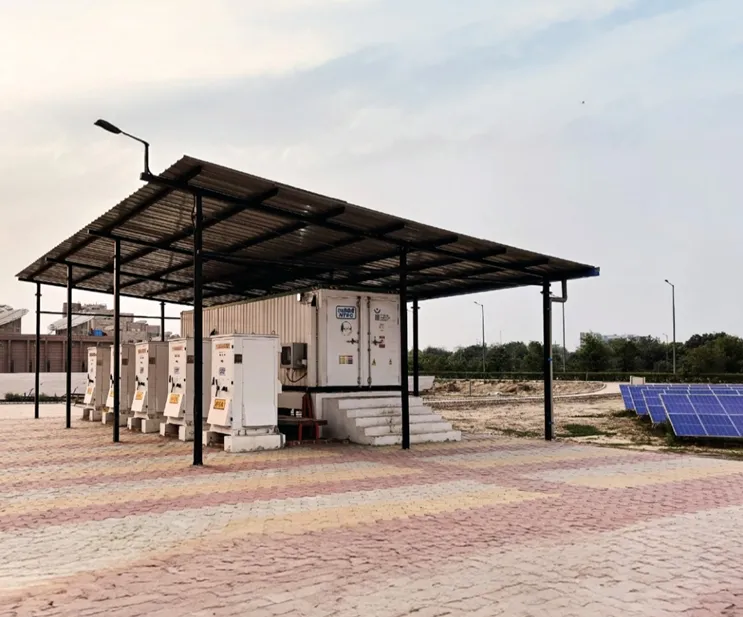
Key Applications of Commercial Battery Storage Systems
Functions of commercial battery energy storage systems include not only backup power. Based on system configuration and operation, various applications of BESS may be found.
1. Peak Shaving
BESS can discharge during periods of high demand, helping businesses manage electricity consumption peaks.
2. Load Shifting
Electricity can be stored during periods of lower demand or when renewable generation is available and used later when electricity demand increases.
3. Renewable Energy Integration
BESS can store surplus solar or wind generation and make it available when renewable generation is lower.
4. Backup and Power Resilience
Depending on system configuration, BESS can provide backup power to critical loads during grid interruptions, helping businesses improve operational resilience.
5. Energy Management
An intelligent EMS can coordinate renewable generation, battery storage and grid consumption to optimise energy flows across the facility.
6. Supporting Decarbonisation
By increasing the utilisation of renewable electricity, BESS can become an important component of a company’s broader decarbonisation strategy.
How Should C&I Businesses Evaluate a BESS Solution?
There is no one-size-fits-all configuration for BESS that applies to all commercial or industrial facilities.
The correct solution will depend on the electricity usage characteristics of the facility, along with its renewable generation profile.
Companies will have to consider criteria such as:
- Daily and seasonal electricity consumption
- Peak demand profile
- Renewable generation profile
- Required battery capacity
- Required discharge duration
- Battery cycling requirements
- Existing electrical infrastructure
- Applicable energy tariffs and demand charges
- Integration with solar or other renewable sources
- Energy management and monitoring capabilities
- Critical loads and backup requirements
An analysis of the load profile will help in deciding the correct size of battery along with its discharge time. It is important to realize that the aim should not just be to put in the largest battery possible. Rather the whole system design should cater to the particular energy needs of the business.
FAQs
1. What is the meaning of BESS?
BESS refers to Battery Energy Storage System. It is a system that involves storing electricity in batteries and making it available for use when needed.
2. What safety features are used in current BESS?
The current BESS has several features to ensure its safety, such as battery monitoring, temperature control and voltage, battery management systems (BMS), thermal management, fire detection, fire suppression, and automatic shutdown systems. Appropriate design, installation, ventilation, and monitoring of the system play a vital role in the safety of the BESS.
3. What is the difference between BESS and diesel generators?
BESS generates electricity and then stores it until its release whereas diesel generators produce electricity through fuel. BESS is very fast in action and can be combined with renewable energies such as wind and solar energy. In relation to an application, BESS decreases the dependency on diesel generators for backup purposes along with peak shaving, load shifting and optimization of renewables.
4. Is it possible to use BESS with rooftop solar or open access solar?
Yes. BESS can be combined with rooftop solar, on-site solar, open access renewable power and other sources of electricity generation. The excess renewable power can be stored in the battery and then discharged during times when there is lower generation or when electricity demand increases at the facility.