




Quick Summary
- FPEL has supplied ~7 MWp of on-site solar power and 300,000+ I-RECs to Unilever’s India Arm – Hindustan Unilever Limited (HUL) to accelerate its renewable energy transition journey.
- Corporates, especially those involved in manufacturing are increasingly adopting one or more forms of clean energy to meet Net Zero goals
- Combining solar with wind, and additionally battery storage can help corporates maximise their energy derived from ‘clean sources’ – while benefitting from increased cost-savings
- I-RECs or Environmental Attributes are increasingly being adopted by firms, in addition to or in place of physical consumption
1. Building a Greener Manufacturing Future: HUL’s Renewable Energy Journey
For large manufacturing enterprises, sustainability today is no longer limited to ambition – it is deeply tied to operational resilience, cost optimisation, and measurable climate action. As one of the world’s leading FMCG players, Unilever, specifically its Indian arm, Hindustan Unilever Limited (HUL) has consistently led from the front, embedding sustainability into its manufacturing ecosystem. HUL also has the goal to reduce absolute operational GHG emissions (Scope 1 and 2) by 100% by 2030 from a 2015 baseline.
To accelerate this vision, HUL partnered with Fourth Partner Energy (FPEL), Corporate India’s leading integrated renewable energy solutions platform, to deploy on-site solar solutions across key manufacturing locations.
This partnership is more than an infrastructure deployment – it is a strategic blueprint for how large corporates can decarbonise distributed operations while maintaining efficiency, scale, and long-term business value.
2. FPEL’s On-Site Solutions for HUL
FPEL partnered with HUL across multiple sites in Assam, Maharashtra, Tamil Nadu, Punjab, and West Bengal.
Together, these projects represent around 7 MWp of rooftop solar capacity, creating a geographically diversified renewable energy footprint for HUL.
By implementing customised engineering and execution strategies, FPEL ensured that each installation aligned with HUL’s operational continuity, safety standards, and sustainability priorities.
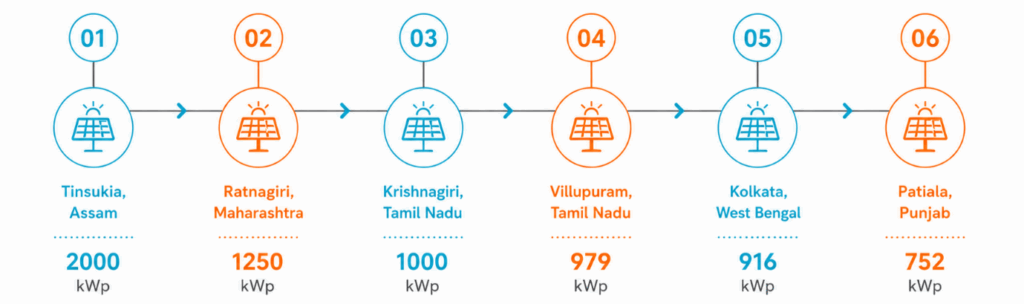
Note: Project capacities are approximate and the sequence does not represent COD order.
3. Beyond Solar: Enabling Broader Climate Commitments Through I-RECs
FPEL and HUL’s partnership extends beyond physical solar infrastructure.
FPEL has also supplied 300,000+ I-RECs to support HUL’s broader renewable energy transition and sustainability commitments.
This integrated approach – combining on-site renewable energy generation with credible environmental attribute instruments – demonstrates how corporates can accelerate decarbonisation through scalable and future-ready solutions.
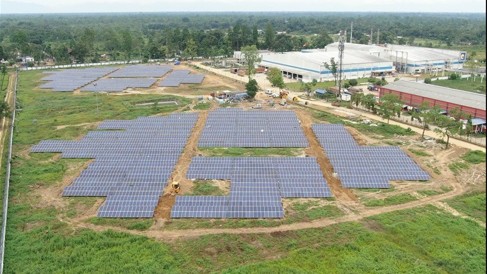
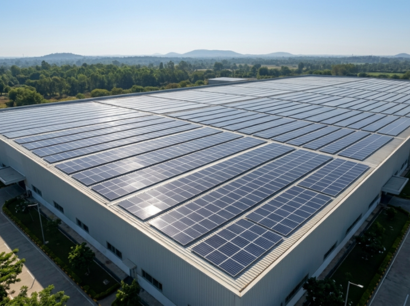
FPEL’s On-Site project for HUL at Doom Dooma, Assam

4. Measurable Impact: Sustainability in Action
The impact of this collaboration extends across environmental and business dimensions:
5. Environmental Impact of HUL On-Site Projects with FPEL Annually
- 2.2 crore litres of water conserved
4,543 kg of coal reduction
9,473 tonnes of reduced carbons emission
Business Impact
- Reduced dependence on conventional power sources
- Improved energy cost predictability
- Enhanced sustainability leadership in the FMCG sector
- Up to 40% cost savings on electricity bills
Why Manufacturers Like HUL Are Focusing on Renewable Energy Transition?
- Economic Benefits: Cost savings per unit of electricity
- Regulatory and Investor Compliance
- Accelerating Net Zero Goals
- Government Incentives for Green Manufacturers
- Responsibility Towards a Sustainable Future
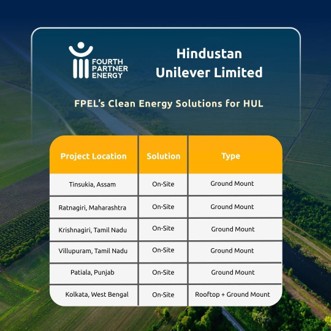
6. FPEL Footprint in the Manufacturing Sector
Fourth Partner Energy has delivered ~900 MWp of clean energy across the manufacturing segment, with over 500 MWp of pipeline capacity.
Manufacturers can procure clean energy through On-Site, Open Access, BESS, as well as I-RECs.
FPEL has several major names in its On-Site clientele, including HUL, Tata Motors, Hyundai, Bridgestone, Schneider, Saint-Gobain, Akzo Nobel, JK Tyre, etc.
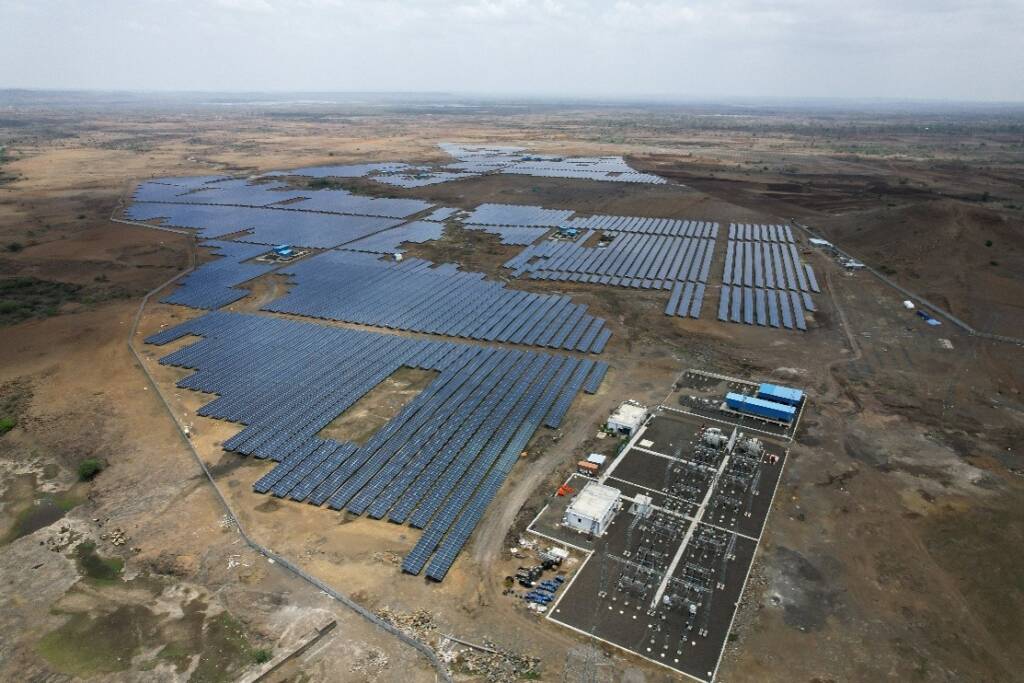
Dhule Solar Park, Maharashtra: FPEL’s 150 MWp solar park supplies clean power to manufacturing facilities of Varun Beverages, Kores, and Hatsun Agro Products.
6. The Road Ahead: Replicable Renewable Energy Leadership
As manufacturing companies across India navigate rising energy costs, carbon accountability, and stakeholder expectations, HUL’s renewable energy journey offers a replicable model.
Through strategic partnerships, customised deployment, and integrated renewable energy solutions, corporates can transform sustainability from a reporting metric into a business advantage.
At Fourth Partner Energy, we continue “Partnering for Sustainable Change” by enabling corporates to adopt integrated renewable energy solutions that create long-term environmental and business impact.
Conclusion
The HUL-FPEL partnership is a testament to how renewable energy, when implemented strategically, can power more than facilities; it can power industry-wide transformation.
With over 7 MWp of rooftop solar and 300,000+ I-RECs delivered, this collaboration reflects the future of sustainable manufacturing.
The future of manufacturing will be shaped by businesses that successfully integrate sustainability with operational efficiency.
Frequently Asked Questions (FAQs)
1. How can large manufacturers accelerate renewable energy adoption at scale?
By combining on-site renewable energy solutions with broader mechanisms like I-RECs, manufacturers can scale sustainability while maintaining operational efficiency.
2. Why is an integrated renewable energy approach important for large manufacturers?
A combination of on-site solutions and scalable renewable energy mechanisms helps manufacturers balance operational efficiency with long-term sustainability goals.
3. Why are manufacturers shifting to renewable energy?
Manufacturers are adopting renewable energy for cost savings, compliance, decarbonisation, and stronger long-term competitiveness.
4. What renewable energy solutions does FPEL offer manufacturers?
FPEL offers On-Site solar, Open Access, BESS, and I-RECs to support integrated renewable energy journeys.
5. Can renewable energy improve manufacturing competitiveness?
Yes, renewable energy can lower costs, strengthen ESG outcomes, and improve operational resilience.
6. What are I-RECs, and how do they support sustainability goals?
I-RECs (International Renewable Energy Certificates) are globally recognised certificates that verify electricity has been generated from renewable energy sources. They help organisations support renewable energy adoption and strengthen decarbonisation commitments.
Power your manufacturing future with integrated renewable energy solutions. Mail us at marketing@fourthpartner.co