






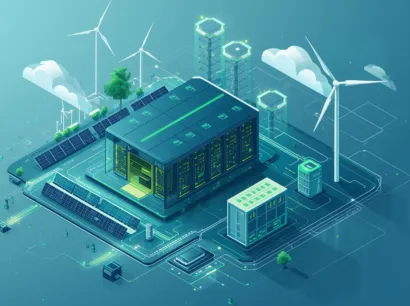
Data centres are the invisible backbone of the digital economy. From cloud computing and AI workloads to streaming services and financial transactions, they power nearly every digital interaction today. However, this digital infrastructure comes with a significant energy footprint. Data centres operate continuously with almost zero tolerance for power interruptions, making reliable electricity supply a critical operational requirement.
At the same time, global technology companies and hyperscale data centre operators are committing to ambitious sustainability targets. Many are moving beyond simply purchasing Renewable Energy Certificates (RECs) and are instead seeking real, hourly matched clean electricity that directly powers their operations.
India’s energy transition presents a unique opportunity in this context. The country has rapidly expanded its renewable energy capacity, crossing 250 GW of non-fossil power capacity in 2025, with solar and wind leading the growth. However, the challenge remains: how can data centres rely on renewable energy sources such as solar and wind while maintaining uninterrupted 24×7 operations?
The answer lies in combining Open Access renewable procurement, wind-solar hybrid generation, and battery energy storage systems (BESS) to create a reliable round-the-clock green power ecosystem.
The Shift: From I-RECs to Real-Time Green Power
For years, many data centres relied on International Renewable Energy Certificates (I -RECs) to greenify their electricity consumption. While RECs helped companies claim renewable energy usage, they often represented clean power generated elsewhere and at different times from when the electricity was actually consumed.
Today, the narrative is shifting. Leading technology companies are increasingly pursuing hourly carbon-free energy matching, where renewable electricity generation more closely aligns with the timing of energy consumption. This approach is particularly relevant for data centres that operate around the clock and require a stable power supply throughout the day and night.
This shift reflects a broader transition in corporate clean energy strategies—from symbolic renewable claims toward physically delivered green power that directly supports operations.
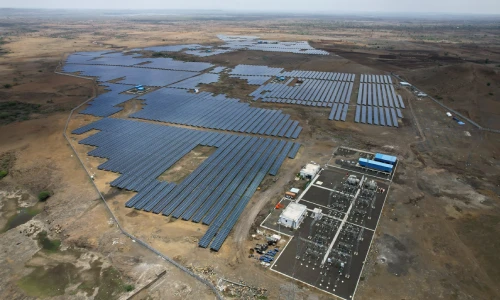
Dhule, Maharashtra 150 MWp Solar Park
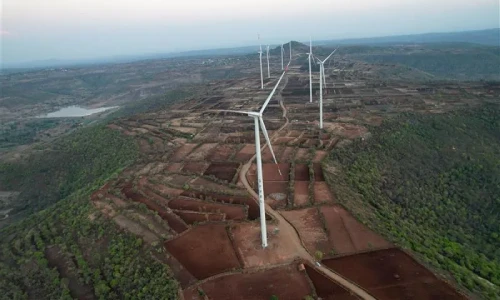
Nippani, Karnataka 56.7 MW Wind Park
The Open Access Advantage for Clean Energy Adoption
One of the key enablers of this transition in India is Open Access renewable energy procurement. Through Open Access, large electricity consumers can procure power directly from renewable energy developers rather than relying solely on traditional utility supply.
For data centre operators, this model offers several strategic advantages. It enables long-term renewable power purchase agreements that provide price certainty, helps reduce exposure to rising grid tariffs, and allows businesses to directly support the development of new renewable infrastructure rather than relying on paper-based offsets.
However, while renewable procurement through Open Access improves access to clean electricity, relying on a single renewable source such as solar or wind is often insufficient for data centres.
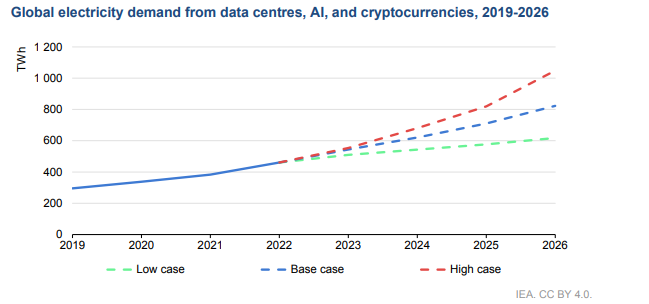
Solar power is limited to daylight hours and drops to zero after sunset, while wind generation depends heavily on weather conditions and seasonal patterns. Data centres operate 24×7 with high, stable loads, and even minor grid disturbances can result in costly downtime. Global data centre electricity demand is rising sharply due to AI and digitalisation, intensifying stress on power systems that were not originally designed for hyperscale, always-on demand.
Benefits of Using Wind-Solar Hybrid Systems
This is where wind-solar hybrid systems offer a more reliable renewable energy solution.
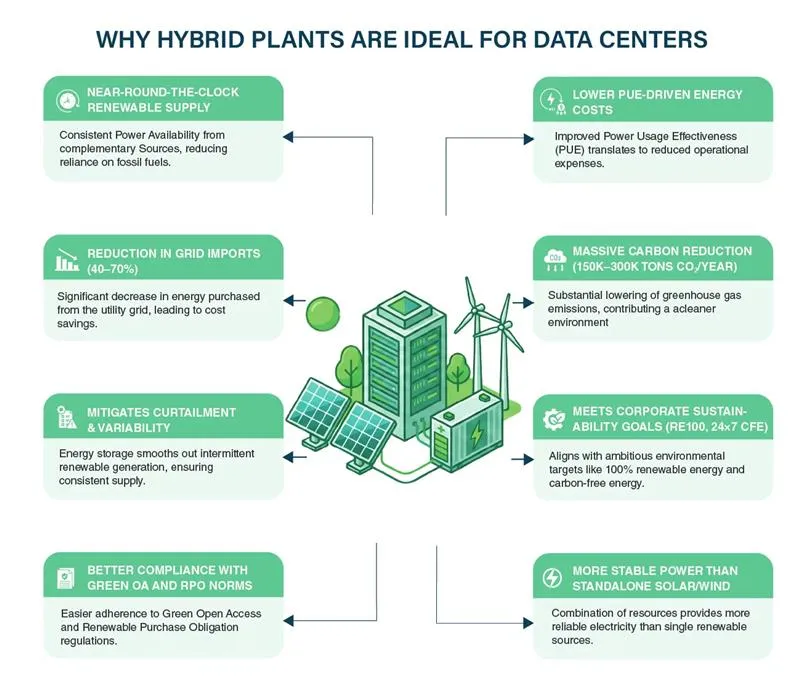
By combining solar and wind generation, hybrid systems leverage the complementary nature of these resources. Solar generation typically peaks during daytime hours, while wind generation often increases during evening and nighttime periods. This complementary generation pattern improves renewable energy availability throughout the day.
For energy-intensive facilities such as data centres, hybrid renewable systems provide several advantages. They help reduce power variability, increase renewable energy utilization, and optimize land and transmission infrastructure by sharing assets across both technologies.
Source: CtrlS Datacenters
By delivering a more balanced and consistent generation profile, wind-solar hybrid projects help data centres move closer to achieving round-the-clock clean power.
The Role of Battery Energy Storage Systems (BESS)
Even with wind-solar hybrid generation, achieving true 24×7 renewable energy supply requires energy storage. This is where Battery Energy Storage Systems (BESS) play a critical role.
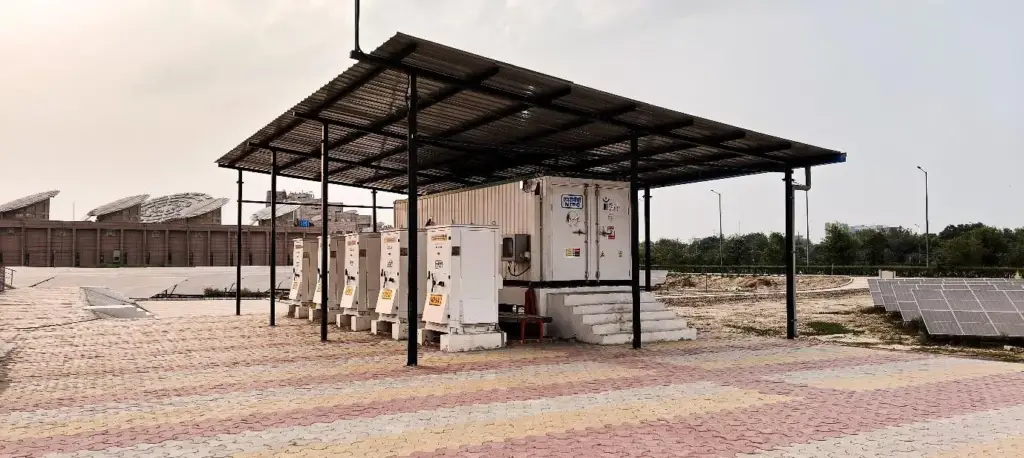
BESS acts as an energy buffer by storing excess renewable electricity—often generated during mid-day solar peaks—and discharging it when generation drops, such as during nighttime or low-wind conditions. This capability allows renewable energy to be shifted across time, helping maintain a stable and reliable power supply.
For data centres that require uninterrupted operations, storage can also reduce dependence on conventional backup systems, manage peak demand, and improve overall grid stability.
When integrated with Open Access renewable procurement and hybrid generation, storage solutions can enable near-continuous clean energy supply, allowing high-availability facilities to achieve up to 90–96% green power uptime while reducing exposure to fossil-fuel-based grid volatility.
NTPC Netra’s Solar + Battery Storage System
Financial & Operational ROI
Beyond sustainability commitments, renewable energy procurement through Open Access hybrid projects also offers compelling financial and operational benefits for data centre operators. Industry insights suggest that wind-solar hybrid open access projects can meet 85–90% of the electricity demand of large commercial and industrial consumers, significantly reducing dependence on conventional grid power.
From a cost perspective, renewable power procured through captive or group captive models can deliver electricity at ₹2.5–₹4 per kWh, often lower than conventional industrial grid tariffs. For large energy consumers such as data centres, this can translate into approximately ₹5 million per MW in annual savings.
Operationally, long-term renewable power purchase agreements also provide predictable electricity pricing over 20–25 years, helping businesses hedge against tariff volatility and fuel price fluctuations. Beyond financial benefits, companies adopting renewable energy also strengthen their ESG credentials and align with global decarbonisation commitments.
Powering Sustainable Data Centres with Integrated Renewable Solutions
As data centres scale to support the growing demand for AI, cloud computing, and digital services, ensuring reliable and sustainable power supply has become increasingly important.
Fourth Partner Energy (FPEL) supports data centre operators in transitioning to cleaner energy through Open Access renewable procurement, wind-solar hybrid projects, and energy storage integration. By developing and managing large-scale renewable assets, FPEL enables businesses to access competitively priced green electricity while maintaining the reliability required for 24×7 operations.
Through integrated energy solutions that combine renewable generation, storage technologies, and long-term power purchase agreements, FPEL helps data centres reduce carbon emissions, stabilize energy costs, and accelerate progress toward their sustainability goals.
To know more about customised RTC Renewable Energy for your facility – reach out to marketing@fourthpartner.co