




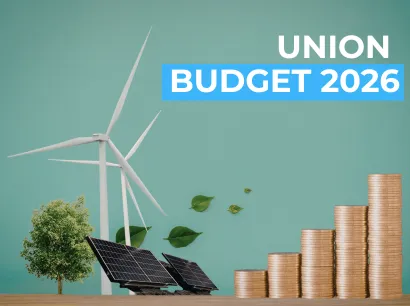
India’s Union Budget 2026 marks a shift from ambition to execution in the Renewables context. With higher allocations for renewable energy, grid infrastructure, energy storage and clean-energy financing – the focus is now on making clean power reliable, scalable and commercially viable.
For Commercial & Industrial (C&I) consumers, this is critical. Renewable adoption today is driven as much by cost competitiveness and energy security, as by sustainability commitments.
Here is what Budget 2026’s clean energy push means for C&I renewable adoption.
Grid Strengthening Improves Reliability for Corporate Renewables
India is targeting 500 GW of renewable energy capacity by 2030, with nearly 50% already installed. Budget 2026 supports this scale-up through continued investments in transmission and distribution infrastructure.
The Budget allocates ₹600 crore to the Green Energy Corridor for developing 6,000 km of intra-state transmission, improving renewable evacuation. In addition, funding for the Reformed Linked Distribution Scheme (RLDS) has increased 15% to ₹18,000 crore, focusing on smart metering and network upgrades.
For C&I consumers using open access or group captive models, stronger grid infrastructure reduces curtailment risk and improves power reliability, making large-scale RE procurement more reliable.
Energy Storage Moves Closer to Commercial Reality
Energy storage is one of the strongest focus areas in Budget 2026. Support for Battery Energy Storage Systems (BESS) has been significantly scaled up through Viability Gap Funding.
- ₹9,400 crore has been approved to support 13,220 MWh of BESS in 2024.
- Second tranche of ₹5,400 crore targets an additional 30 GWh.
India is projected to require nearly 230 GWh of energy storage by 2030 to maintain grid stability amid rising renewable energy capacity.
For C&I consumers with round-the-clock operations, storage improves reliability, enables peak optimisation and supports hybrid renewable solutions – bringing corporates closer to round-the-clock clean energy.
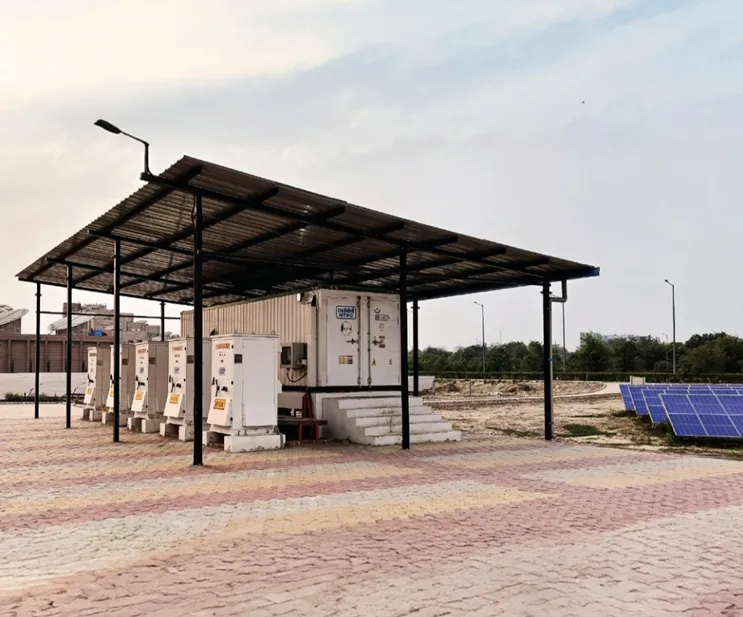
FPEL’s 4MWp Solar and 1 MWhr BESS project – NTPC NETRA, Noida
On-Site Solar Remains a Strong C&I Foundation
Budget 2026 continues to prioritise solar as a core pillar of India’s renewable energy capacity, with increased allocations for solar power and sustained focus on rooftop and grid-scale solar deployment. PM Surya Ghar scheme has received ₹22,000 crore, strengthening the rooftop solar ecosystem.
For factories, warehouses and commercial campuses, this policy continuity supports on-site solar as a low-risk, high-impact solution. Rooftop, ground-mounted, carport systems continue to deliver predictable cost savings with minimal regulatory complexity.
Financing and Cost Efficiencies Improve Project Economics
Access to capital is a key enabler in Budget 2026. Under FY27 Budget Estimates, the MNRE outlay has increased by 24% to ₹75,455 crore, while institutions that support renewable energy projects have seen higher capital allocations. IREDA’s allocation has increased by 15% to ₹40,065 crore, and SECI’s funding has risen by 113%. In addition, duty exemptions on key solar and storage inputs further reduce overall capital costs.
The proposed merger of REC and PFC is expected to streamline clean energy financing, enabling faster access to long-term capital for large C&I-led RE projects. This can help improve project timelines and ease scale-up across multiple locations.
For C&I consumers, improved access to long-term financing combined with lower input costs translates into faster project closures, smoother deployment and stronger returns – making renewable energy a clear business decision.
Emerging Technologies: A space to watch out for C&I
Budget 2026 continues support for emerging clean energy technologies such as green hydrogen, largely through pilot programmes and manufacturing-led initiatives. This reflects the government’s intent to build capabilities that will matter for some industrial segments over the long term.
For the majority of corporates today, however, electricity-based RE solutions such as solar, wind and storage-backed solutions remain the most practical, scalable and cost-effective pathway to cleaner energy.
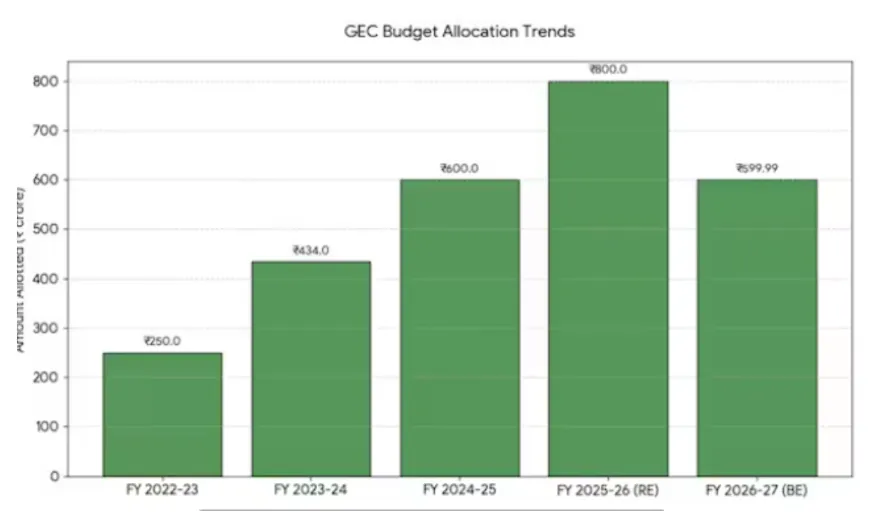
Green Energy Corridor Budget Allocation Trends.
Source: CNBC TV18
C&I’s Way Forward for Clean Energy
Budget 2026 strengthens the clean energy ecosystem rather than relying on short-term incentives. For C&I consumers, the way forward lies in integrated energy
strategies – combining on-site and off-site renewables, leveraging open access and group captive models, and integrating storage for reliability.
As renewable energy capacity grows and systems improve, clean energy becomes a powerful tool for controlling costs, improving reliability and strengthening competitiveness. For C&I consumers, this creates a stable and scalable environment to adopt renewable solutions aligned with both sustainability and business goals.
Corporates that act early and adopt a holistic approach to clean energy will be best positioned to capture long-term value.
Fourth Partner Energy: Aligning with India’s Clean Energy Momentum
Fourth Partner Energy is scaling its renewable energy portfolio in line with India’s clean energy transition, with a target of 9 GW of renewable energy capacity by 2031. Several large-scale projects are nearing commissioning, strengthening execution on the ground.
Supported by favourable policy momentum and signals from Budget 2026, Fourth Partner Energy continues to expand its footprint across states, particularly through open access, helping corporates progress towards their RE100 goals while supporting India’s sustainable development agenda.
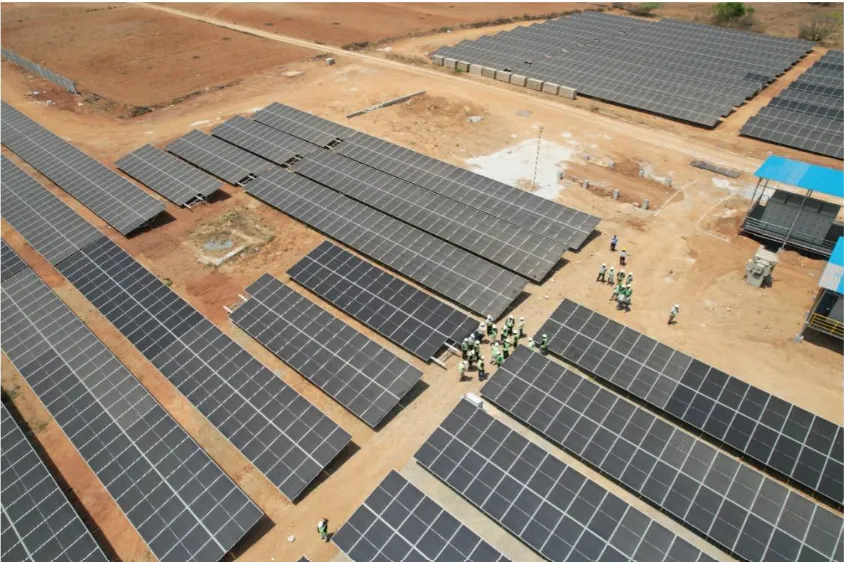
FPEL’s 563 MW Wind Solar Hybrid park at Kudligi, Karnataka
Frequently Asked Questions
What is the key takeaway for C&I consumers?
Improved grid reliability, viable energy storage and better financing make RE adoption more scalable and commercially attractive.
Why is energy storage becoming relevant for C&I consumers now?
With policy and financial support increasing, storage helps businesses manage intermittency, improve reliability and move closer to round-the-clock clean energy.
If corporates want to leverage Budget 2026 and switch to renewable energy, what are the key avenues?
Corporates can adopt on-site solar, procure power through open access or group captive models, deploy Battery Energy Storage Systems (BESS), and leverage other solutions with support from experienced renewable energy solution providers.
How is Fourth Partner Energy strong on policy and regulatory understanding?
Fourth Partner Energy has deep expertise across central and state-level renewable policies, open access regulations and compliance requirements, helping corporates navigate complexity smoothly.
How does Budget 2026 support large-scale renewable adoption by corporates?
Investments in transmission infrastructure, storage and clean energy financing make it easier for corporates to scale renewable solutions across multiple locations.
Start your clean energy journey today
Write to marketing@fourthpartner.co