





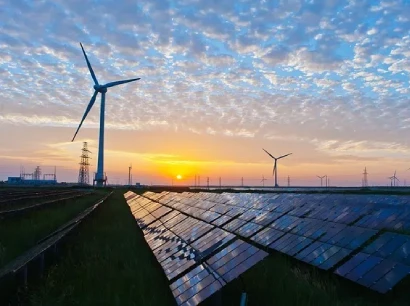
The transition to clean energy is no longer just a checkbox for corporate social responsibility; it is a core business strategy. For commercial and industrial (C&I) consumers, the choice between standalone solar, standalone wind, or a hybrid system is critical. In 2026, the wind-solar hybrid energy for corporates model has emerged as the clear winner for those seeking reliable, round-the-clock (RTC) green power.
What is a Wind Solar Hybrid system and how does it work?
A wind-solar hybrid power plant integrates both solar photovoltaic (PV) panels and wind turbines into a single system, often sharing the same grid connection point and infrastructure.
The core logic is simple: Complementarity. Solar energy peaks during the day when the sun is brightest, while wind energy often peaks during the night and early morning hours. By combining them, the plant fills the generation gaps that exist in standalone systems.
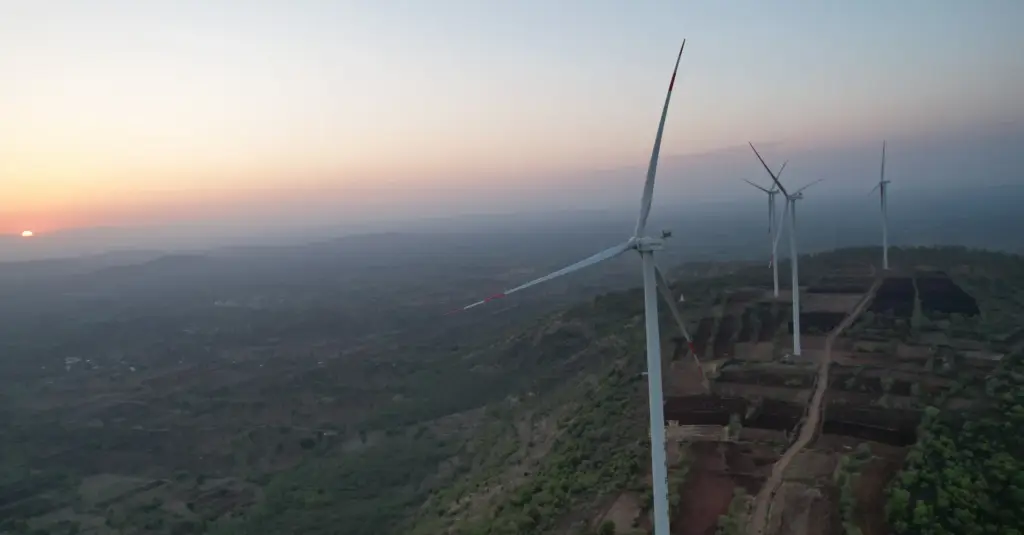
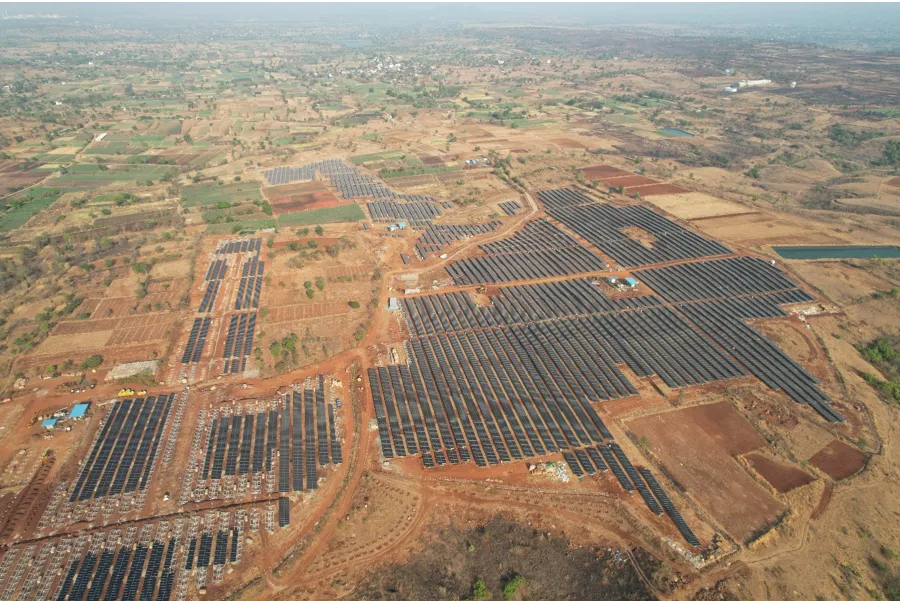
FPEL’s Wind-Solar Hybrid Park at Amreli with capacity of 50 MW Solar and 39.6 MWp
Here’s why Wind-Solar Hybrid is currently amongst the leading solutions for corporate energy transition.
Doubling Efficiency: The CUF (Capacity Utilization Factor) Advantage
In India, the CUF of a standalone solar power plant is 19-21%, while that of a wind turbine is 30-35%.
In a hybrid system, these two sources of power work in sync. Solar power is produced during the day, while in the high-potential states of India, the wind speed peaks at night and during the monsoon season. A properly designed hybrid power plant can ensure a CUF of 45-50%. By transmitting power through the same transmission lines to supply power over a 24-hour period, corporates can effectively double the value of their grid access charges.
Cutting Firming and Storage Costs
The intermittency issue is a multi-billion-dollar problem. A purely solar solution leaves a huge evening peak deficit that can only be met by costly grid power or expensive battery storage.
Since wind and solar are complementary in their generation patterns, hybrid solutions automatically strengthen the energy supply. Recent results show that hybridization cuts the needed battery size for a Round-the-Clock dispatch by as much as 30%, thereby substantially reducing the aggregate Levelized Cost of Energy (LCOE).
Capex Optimization through Shared Infrastructure
Building a standalone wind farm or solar installation entails building two of everything: two substations, two transmission lines, and two sets of land permits.
Hybrid projects, on the other hand, enable the sharing of infrastructure resources. By using a common point for evacuating the generated power and a common substation, project developers can achieve a 12-15% reduction in infrastructure Capex costs. This directly benefits corporate off takers in the form of more favourable Power Purchase Agreement (PPA) prices than those offered for standalone wind or solar with battery storage.
Maximizing Land Productivity
Land is increasingly scarce and expensive. Standalone wind projects require massive spacing between turbines to avoid turbulence, often leaving 90% of the land area underutilized. Hybridization allows for solar panels to be installed in these very “shadow zones.” This dual-use strategy ensures maximum “Green Megawatts” per acre—a vital efficiency metric for ESG reporting.
The Ultimate Seasonal Hedge
Output from stand-alone renewables depends on season. During the monsoon, solar output can fall by 25-30% due to cloud cover. But it is during the monsoon that wind speeds reach their highest point of the year.
A hybrid solution provides an automatic financial hedge. During the monsoon, when wind production is high, it offsets lower solar production. The peak summer months, when solar production is high, offset the lower wind production. This results in a much flatter energy output profile.
FPEL’s Wind Solar Hybrid Portfolio
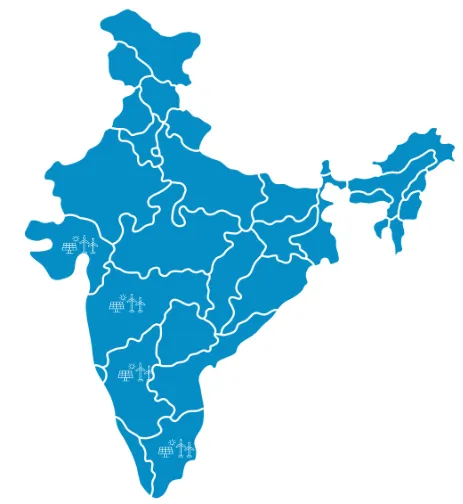
Fourth Partner Energy’s hybrid solar and wind projects span key renewable energy states in India, delivering reliable green power for commercial and industrial consumers. Integrated solar–wind installations are operational in Gujarat (Gondal, Amreli), Maharashtra (Wadzire), Karnataka (Nippani, Kudligi ISTS Park, Ramankoppa, Gadag ISTS Park), and Tamil Nadu (Ottapidaram). This diversified portfolio highlights expertise in developing grid-resilient hybrid renewable energy projects across India.
Take the first step toward clean, reliable energy. Email us at marketing@fourthpartner.co, and our team will assist you with a site assessment and a customized proposal for your business.
Frequently Asked Questions:
What exactly is a Wind-Solar Hybrid (WSH) system?
A Wind-Solar Hybrid system combines solar panels and wind turbines at a single location. Instead of relying on one energy source, it uses both to provide a more stable power supply—generating solar energy during the day and wind energy often peaking at night.
Will a hybrid system help me save on infrastructure costs?
Yes. Because the wind turbines and solar panels share the same land, transmission lines, and substations, the setup cost is 10–15% lower than building two separate projects. It also maximizes the energy you can generate from a single plot of land.
Can I add wind turbines to my existing solar farm?
Absolutely. This is called “Brownfield Hybridization.” If you already have a solar plant, you can often add wind turbines to the same site. This allows you to use your existing grid connection and land more efficiently without starting a new project from scratch.
Is a hybrid system more difficult to maintain?
Not significantly. While wind turbines have moving parts that require regular checks, the overall management is streamlined. Modern monitoring software allows you to track both solar and wind performance from a single dashboard, making it easy for your facility team to manage.
Start your clean energy journey today
Write to marketing@fourthpartner.co